
0104
The year as one flow
Home is a single diagram: every stream of income, through costs, to the tax to set aside and what’s left to keep.
Small streams. Big picture.
Bookkeeping and tax estimates for freelancers, sole traders and landlords. It keeps separate books for each stream of income, says what to set aside for tax, and puts every deadline in one place.
Nobody tells you, when you start working for yourself, that you’ve also just become an accountant. You get into design to design (or into plumbing to plumb, or into renting out the spare room because it seemed like a good idea at the time), and then one day a tax deadline turns up and you realise you have no idea how much of the money in your account is actually yours.
And it gets messier, because people who work for themselves almost never have just one income. There’s the client work. There’s the thing you sell online. There’s the place you let out. Most bookkeeping tools either want all of that poured into one bucket, or want you to be a “business” with a capital B, and neither is true for most of us.
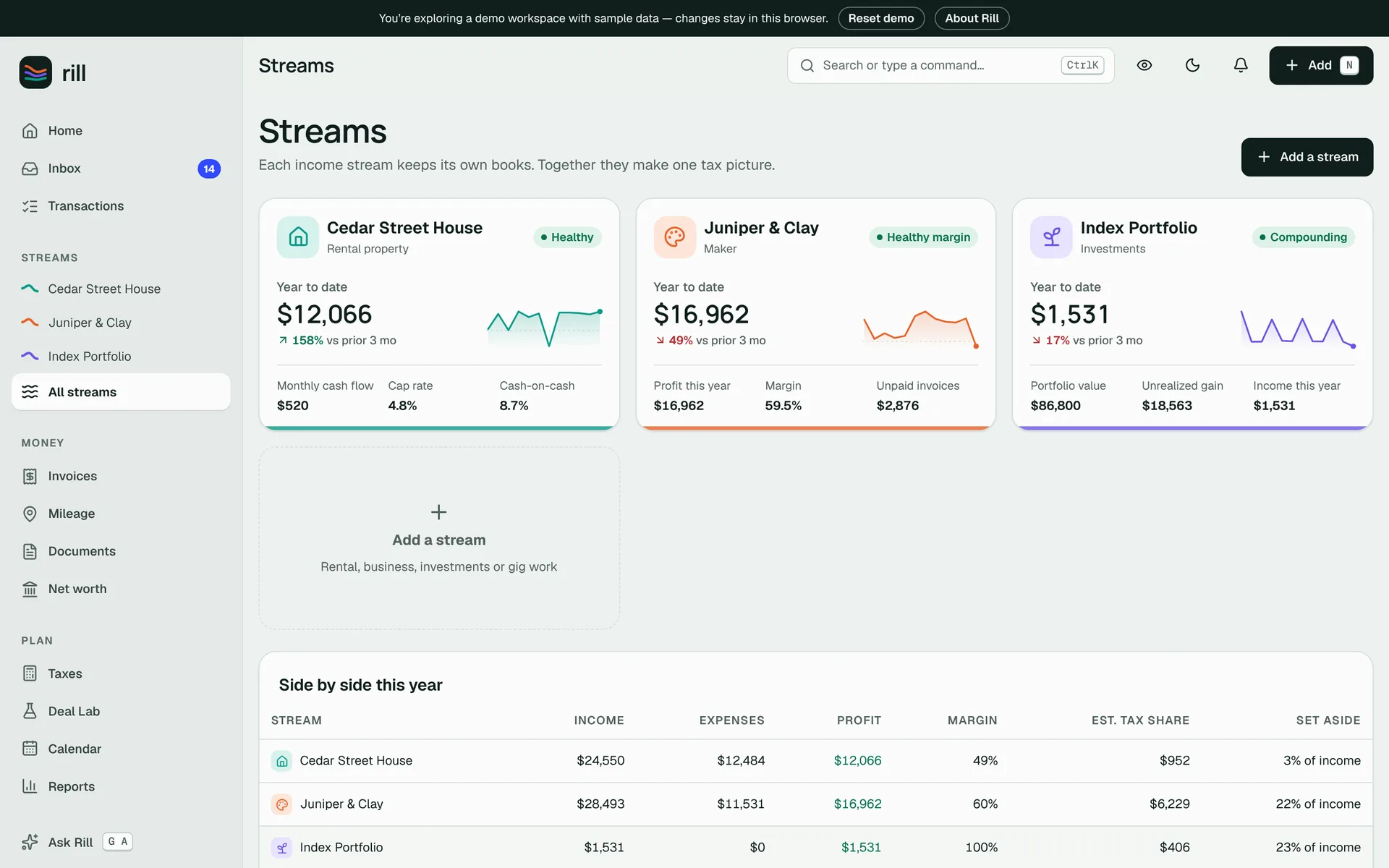
Streams: So Rill starts from how the money really arrives. Each way you earn is a stream, and each stream keeps its own books: its own income, costs, profit and paperwork. The rental never muddies the client work. Then, because the tax office doesn’t care how tidy your streams are, Rill works the tax out across all of them at once.
The big picture: The home screen is one diagram, and it’s the part I’m proudest of. Money comes in on the left from each stream, flows through costs, and splits at the end into two things: what to set aside for tax, and what is yours to keep. That last number is the one every self-employed person is really asking for, and most software makes you dig through three reports to find it.
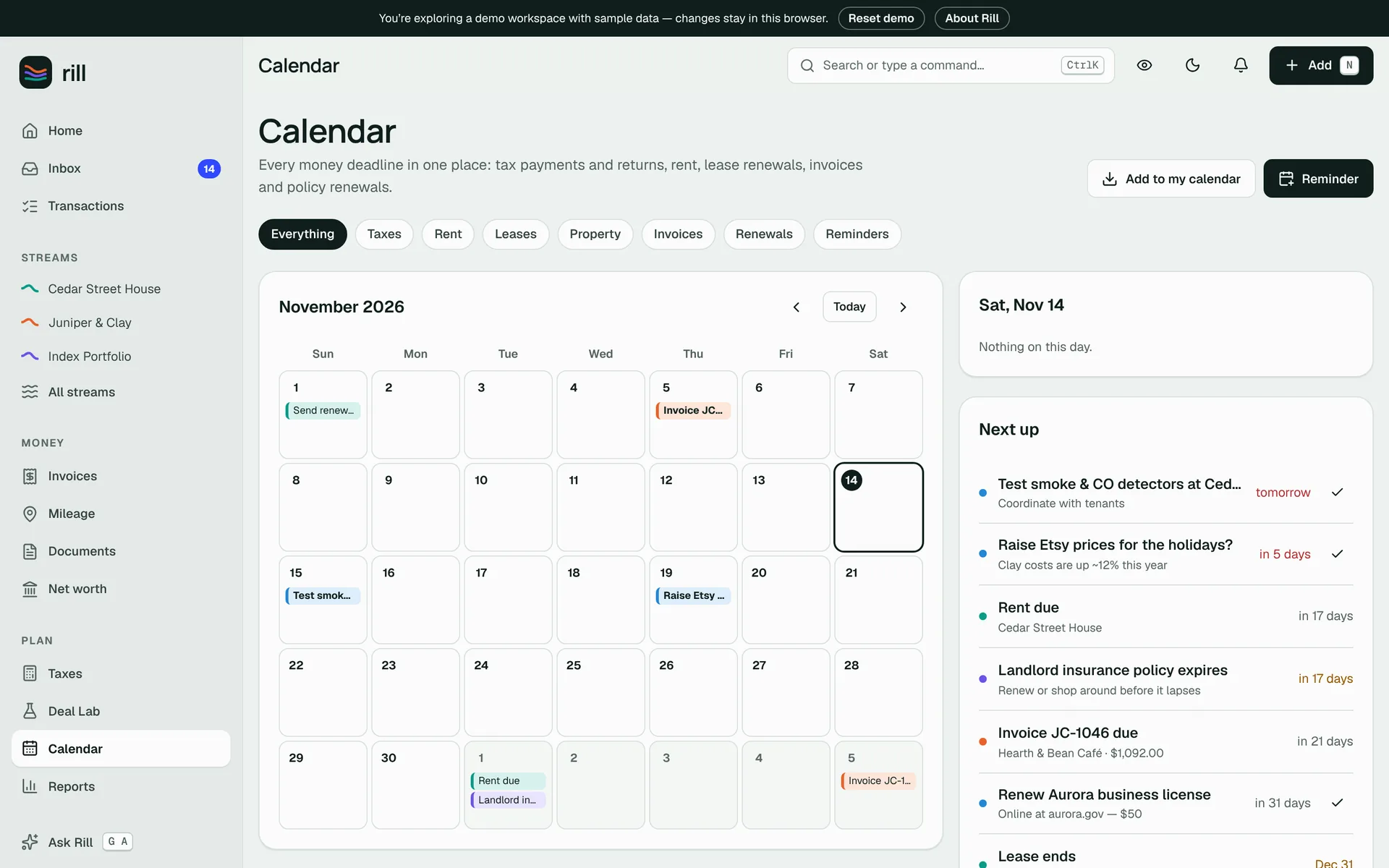
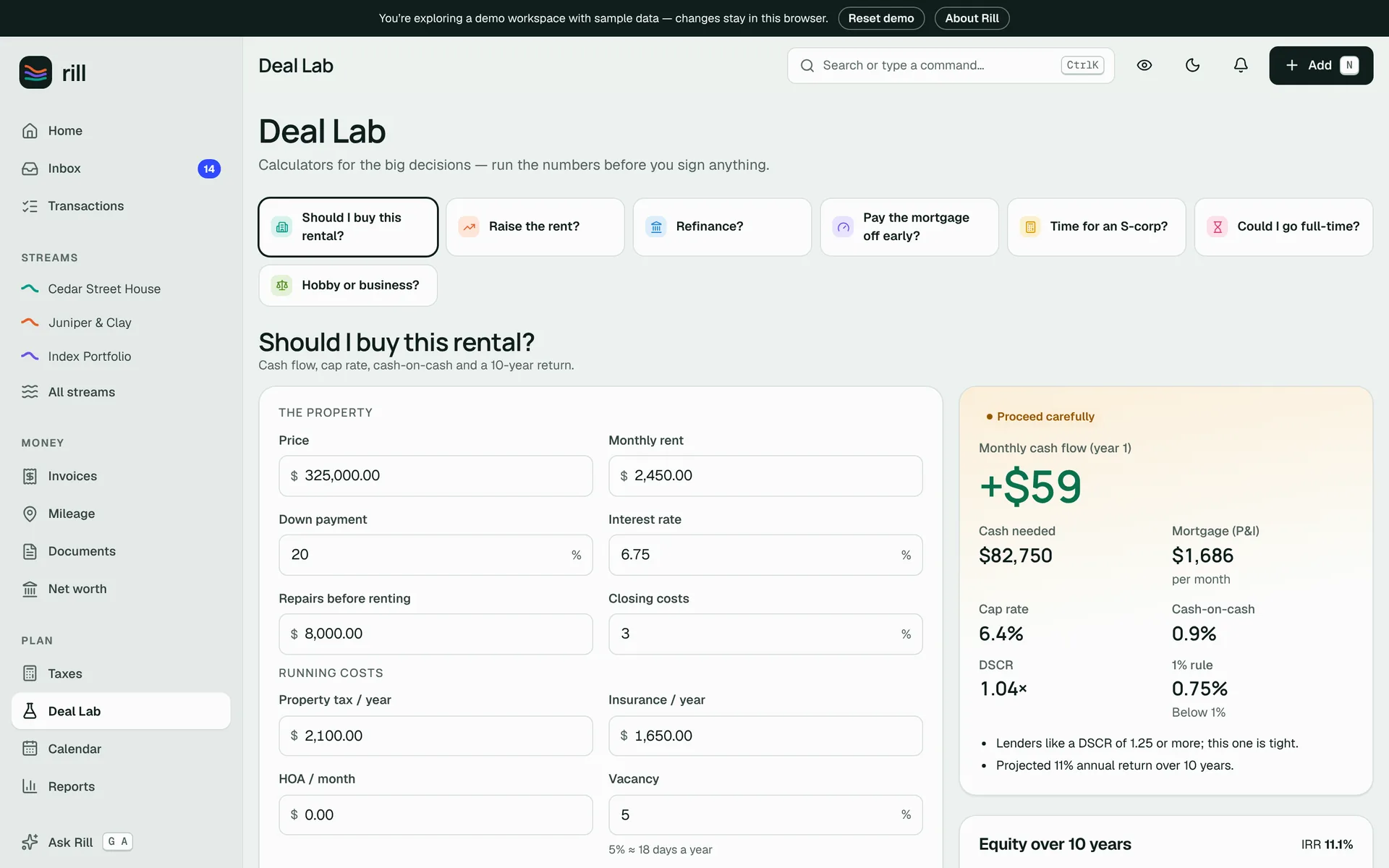
Calm: Everything else is about lowering the heart rate. Every deadline, from a tax payment to a lease renewal, sits in one calendar. The inbox is built to be cleared from the keyboard, so a week of transactions takes less time than making the coffee. And the Deal Lab lets you run the numbers on a rental before you sign anything, which is exactly when you should be running them.
A disclaimer, because I’m a designer and not a tax advisor: the workspace here is a demo with a made-up household and sample figures, and the estimates are there to show how the product thinks, not to do anybody’s actual return. But the idea stands. Small streams, big picture, and no finance degree required.
People who work for themselves rarely have one income. There is the client work, the house that is let, the shop on the side. Rill keeps each one as a stream, with books of its own.
Then it draws the year as a single flow: money in, through costs, to what to set aside for tax and what is yours to keep.
0104
Home is a single diagram: every stream of income, through costs, to the tax to set aside and what’s left to keep.

0204
Every stream has its own profit, twelve months of money in and out, and its own transactions, so the rental never muddies the client work.

0304
One estimate across the day job and every stream, with the working shown and a what-if for the next big expense.

0404
New transactions are filed to a stream in a keystroke or two. A week of bookkeeping takes seconds.
Designed and directed by Amin Rajbanshi, built in conversation with AI.