
0104
Phrases that remember where they came from
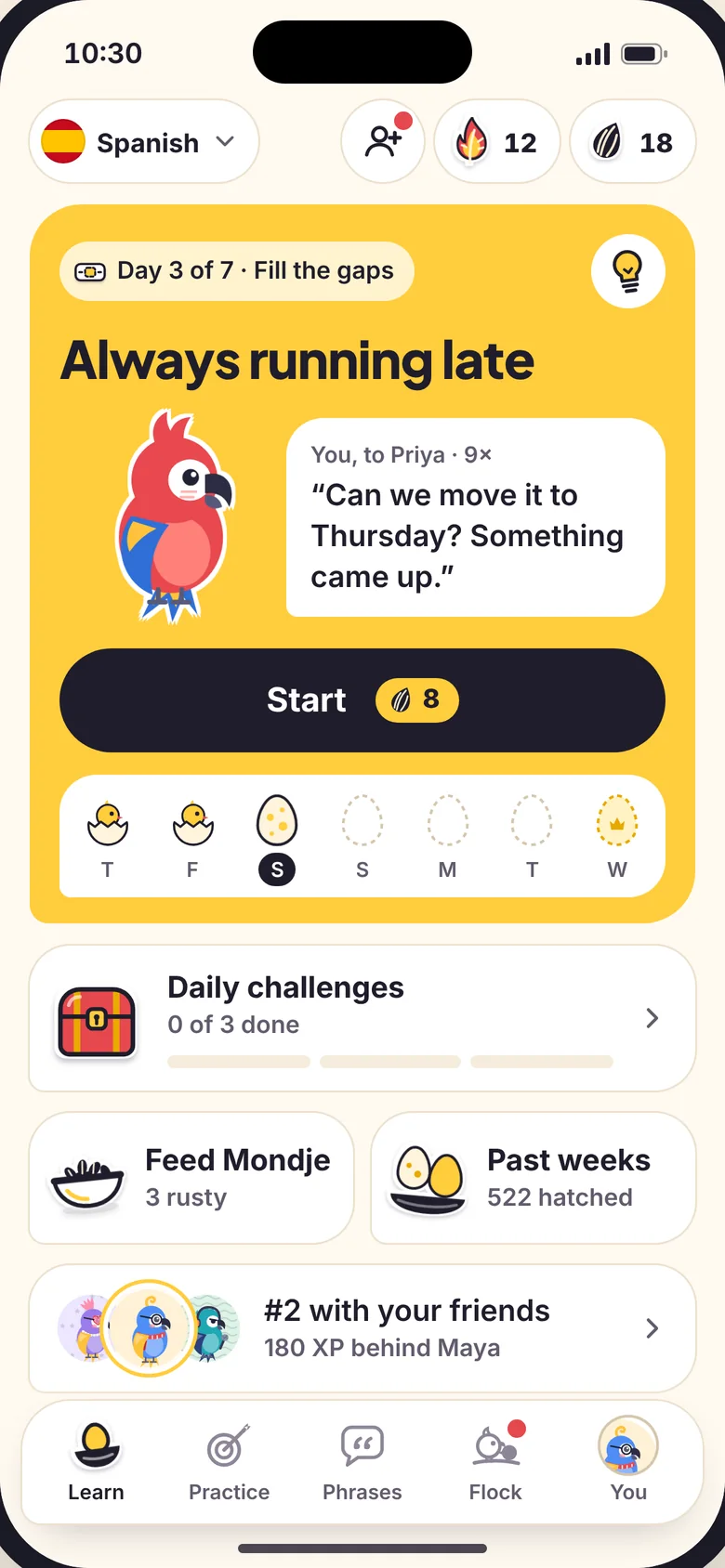
Every phrase keeps the message it was learnt from, how often it’s said and how well it’s holding. The ones going rusty come back first.
Not textbook Spanish. Your Spanish.
A language app that builds every lesson from the learner’s own life: the messages they send, the emails they write, what’s in their calendar and their photos. Five of their own phrases a week, a little harder each day. Shown as a playable preview of the app.
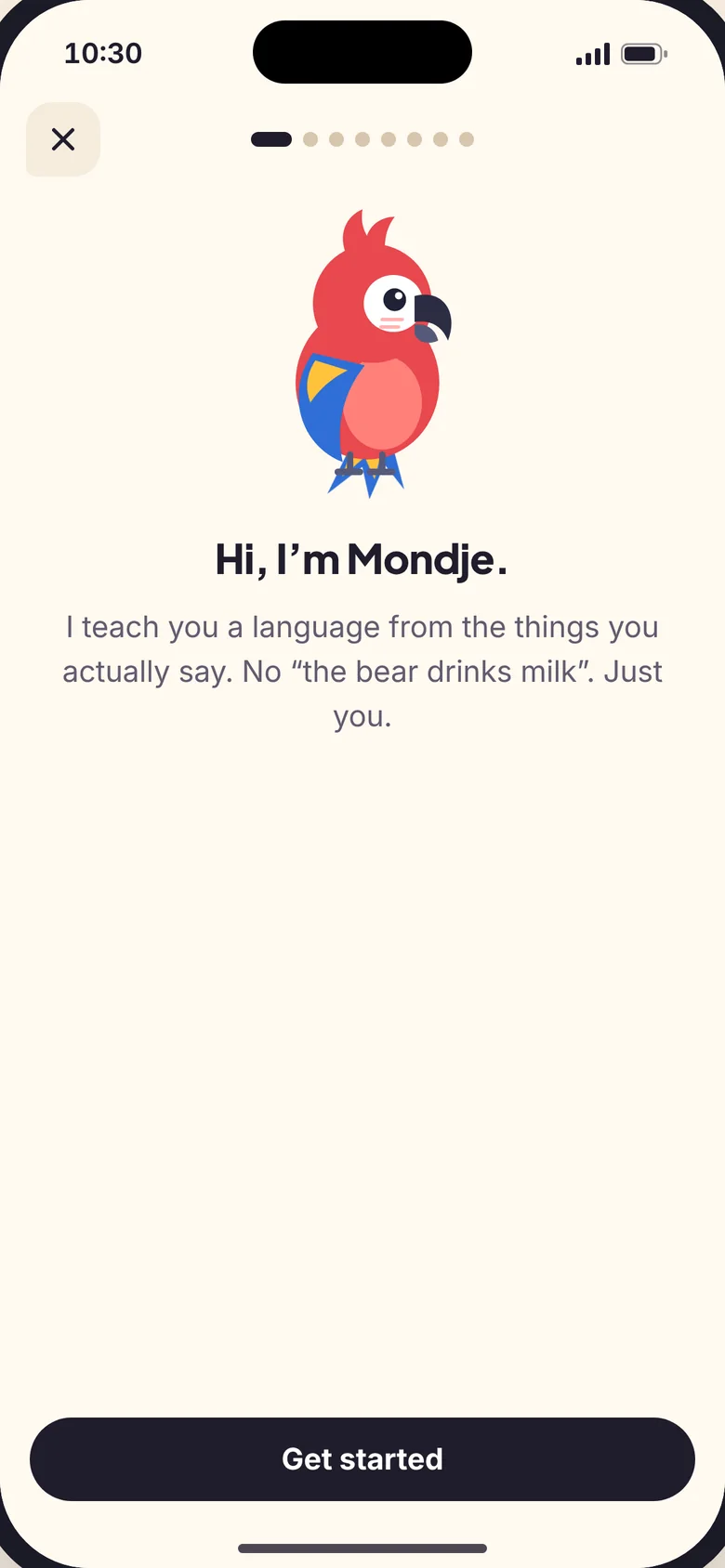
I can speak or understand four languages and I’m working on a fifth, which means I have opened a language app every single morning for longer than I’d like to admit. And every morning the app teaches me how to say something I will never say. The bear drinks milk. The boy has a red apple. I’ve kept a very long streak of sentences that belong to nobody.
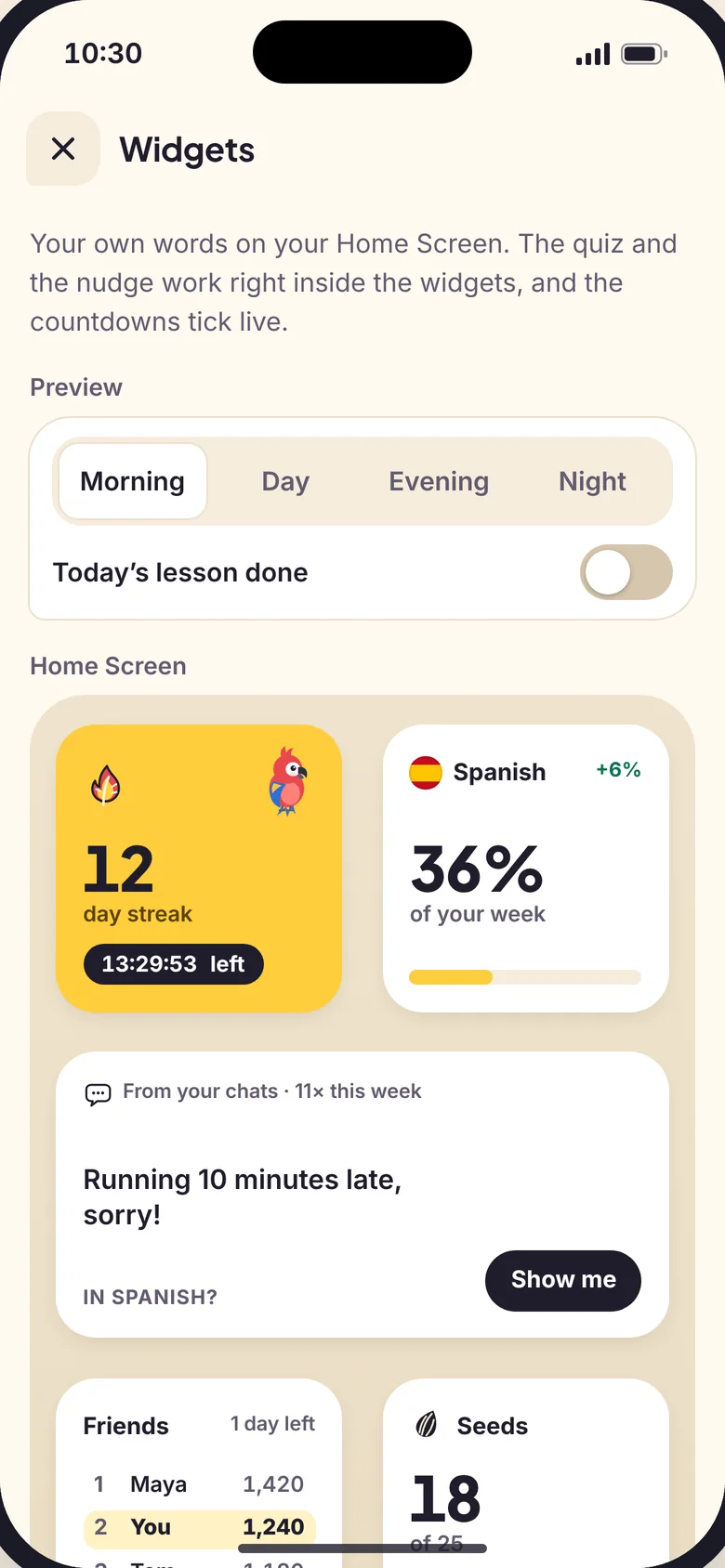
So here’s the question that started Mondje. If the whole point of learning a language is to say the things I actually say, why is everybody on the planet being taught the same sentences? I don’t need the bear. I need “sorry, I’m running ten minutes late”, because apparently I send that one a lot.
Your words: Mondje only looks where you let it (your messages, emails, calendar, voice notes, photos) and only at what you wrote yourself. It finds the things you really say and how often you say them, then picks five a week and teaches you exactly those, a little harder each day. There’s actual science behind why this sticks. Psychologists call it the self-reference effect: we remember things about ourselves far better than we remember things about a bear.
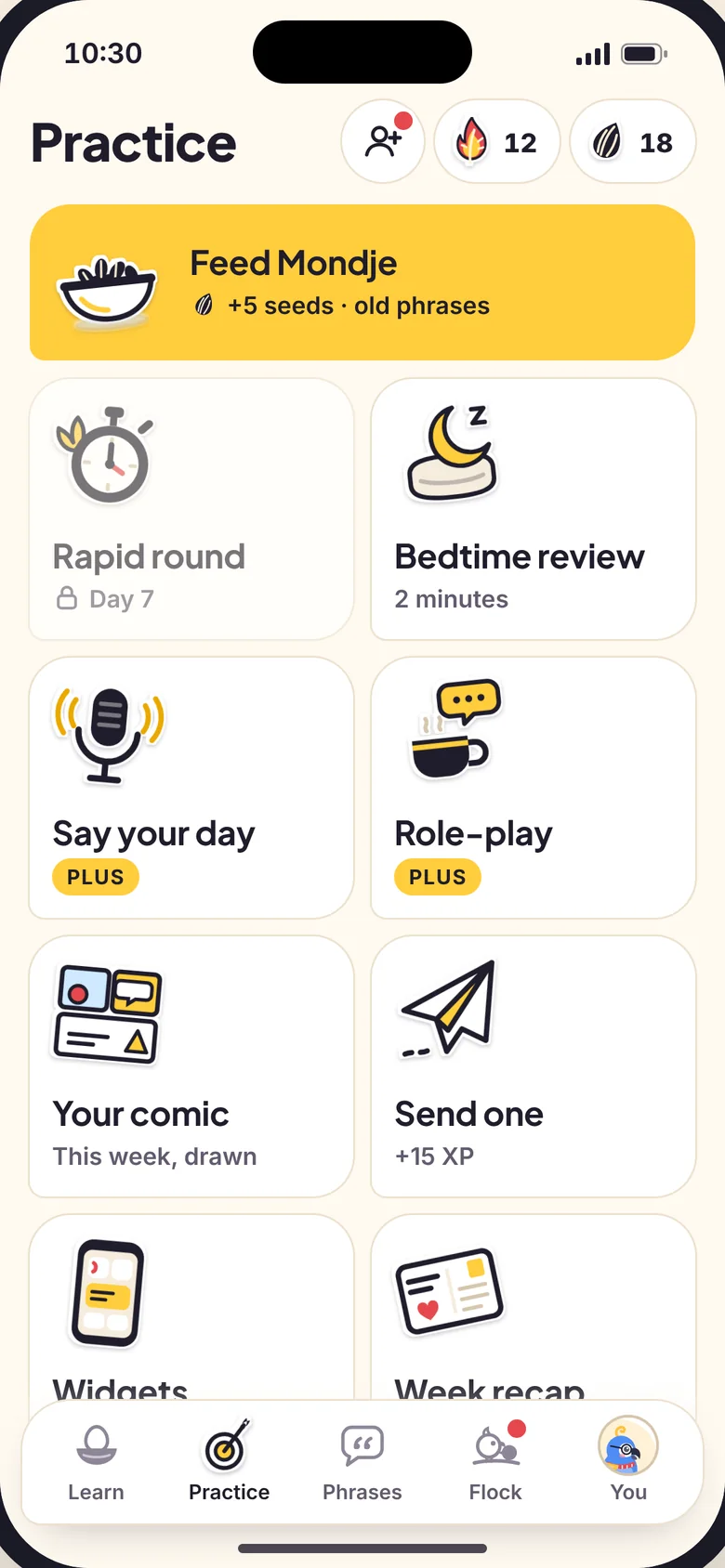
Your week: Because the lessons come from your life, the week itself becomes the material. It gets drawn as a little comic, every phrase remembers which message it came from, and the ones you’re starting to forget come back before they’re gone. Progress isn’t a level or a league, it’s how much of your own week you can now say in Spanish, which I think is the only number that ever mattered.
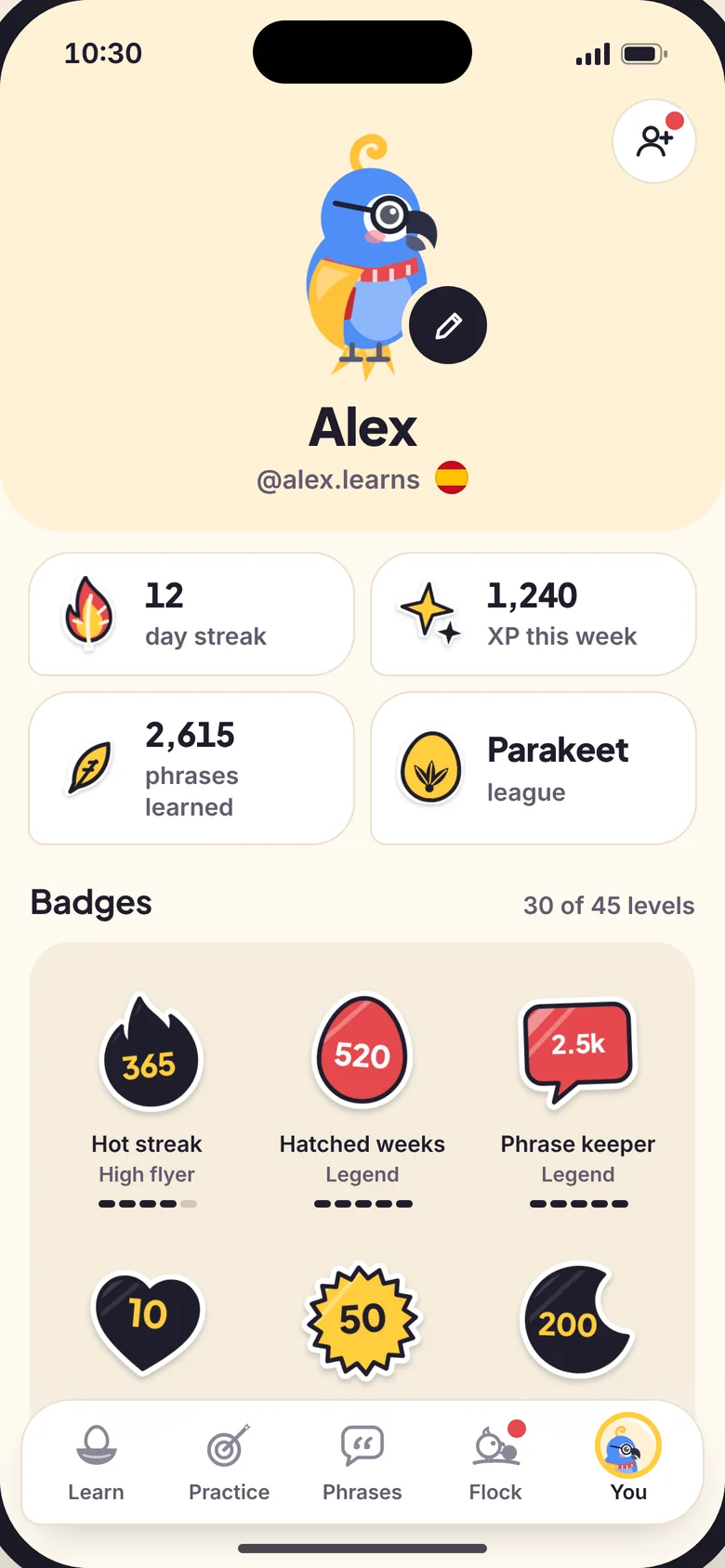
Your bird: I’ll be honest, the bird is there because learning a language alone is a bit lonely. You build your own teacher, hat and all, your friends build theirs, and suddenly there’s a flock, a shared streak and a podium at the end of the week. Is it necessary? No. Did I spend far too long on the hats? Yes.
The obvious question: An app that reads your messages has to earn that, and I don’t think a pretty onboarding screen is enough to do it. In Mondje you choose every source, and it reads only what you wrote. What’s shown here is a playable preview with made-up data, not a finished app with access to anyone’s inbox. If this were ever built for real, that trust would be the product, more than the lessons.
No “the bear drinks milk”. Mondje reads only what the learner wrote themselves, in the places they choose (email, chats, calendar, voice notes, photos), and finds what they really say, and how often.
Each week it picks five of those phrases and teaches exactly those. It works because people remember things about themselves best: psychologists call it the self-reference effect.
0104
Every phrase keeps the message it was learnt from, how often it’s said and how well it’s holding. The ones going rusty come back first.

0204
Progress isn’t a level or a league. It’s how much of this week’s writing can now be said in Spanish.

0304
Mondje’s bird is built from parts, so every learner’s teacher is their own.

0404
Friends, shared streaks and a weekly podium: gentle competition among people who know each other.
Designed and directed by Amin Rajbanshi, built in conversation with AI.