
0104
A figure built from four numbers
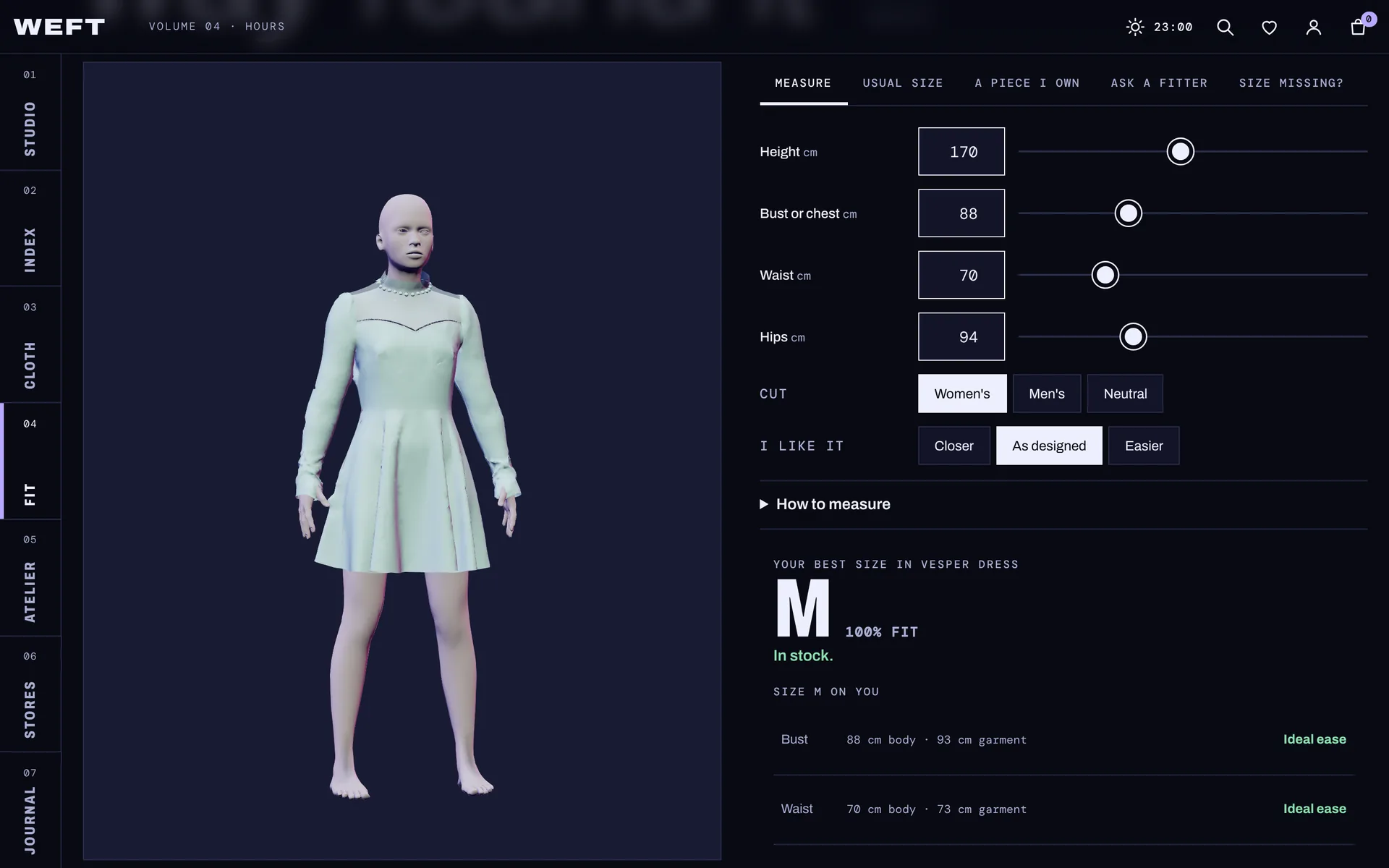
Height, bust, waist and hips rebuild the figure, and the garment is measured against it: a heat map shows where it sits close or loose, and the best size follows.
The future of fashion, vapourwared.
A fictional fashion house built as one fitting room. The customer’s figure is made from their own measurements and dressed in 3D garments that refit as the numbers change. The shop recommends a size for the fit they like, and cuts pieces to measure so nothing is wasted.
Visit weft.aminrajbanshi.com (opens in a new tab)
Similar to Mise, the fashion industry is another area where 3D technology gets thrown around as if it’s stuck in a limbo. Nobody seems to be able to adopt it in a holistic way although there’s bits and pieces being published by a few of the bigger and some niche businesses. Now, I’m not saying this is the perfect example of a more holistic adoption and a full appreciation of 3D technology in the fashion world but I believe this is a decent attempt.
CLO3D has been a big turning point for the industry, and has given rise to accessible 3D technology for people in and outside of the fashion industry, but since I’m not an expert user of the software I can’t realistically show an expert example of garment development and an extensive exercise on the capabilities of the software. And the truth is, WEFT relies on the quality of garments being produced using CLO3D. So this is just a precautionary disclaimer for people who might be thinking WEFT is the best version of 3D that the fashion industry can get. This is not the best, by far.
But the idea and the lessons that can be learnt are there to see. A business model built around 3D technology reduces waste which is perhaps the biggest criticism haunting the fashion industry. A website where you can directly input your body measurements, that recommends the perfect size for you based on the fit you are looking for, the business will be able to produce the item accordingly because of the 3D model built on CLO3D. It can adopt what would basically be known as the measure and make model, although questions on how it can be extrapolated to 100s and 1,000s of orders is yet to be answered.
Perhaps WEFT is the future for bespoke dresses and only a small portion of the entire fashion industry may adopt this model. Perhaps retail fashion will never truly be able to transition or allow themselves to slow down to make such a drastic change in methods, but part of me also thinks that if the industry really wanted to solve their waste problem through the adoption of 3D technology and the methods displayed by WEFT, they probably could’ve already done so by now.
Four measurements build the customer’s own figure, and every garment is fitted to it in 3D: where it sits close, where it has room, and which size suits the way they like to wear it.
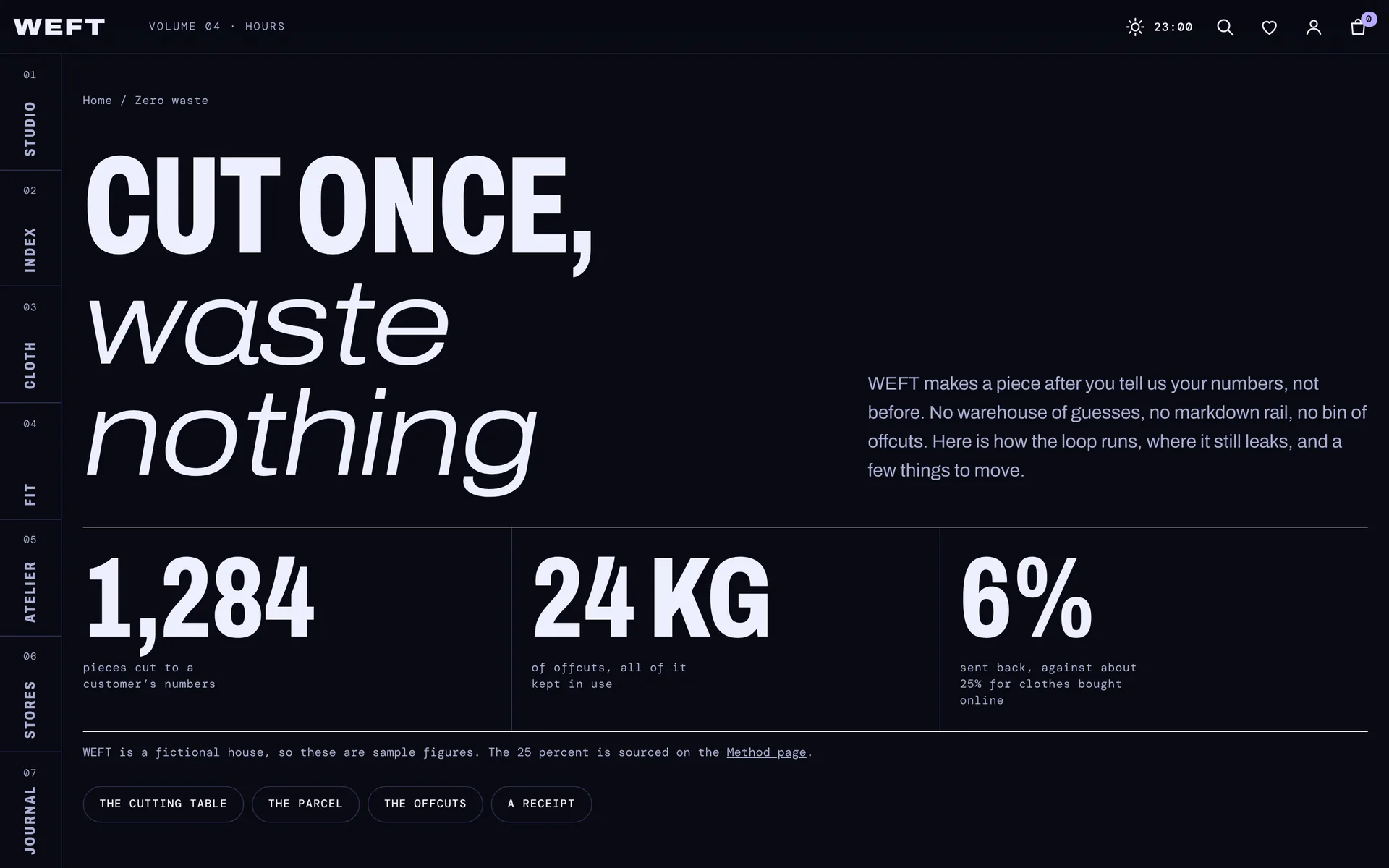
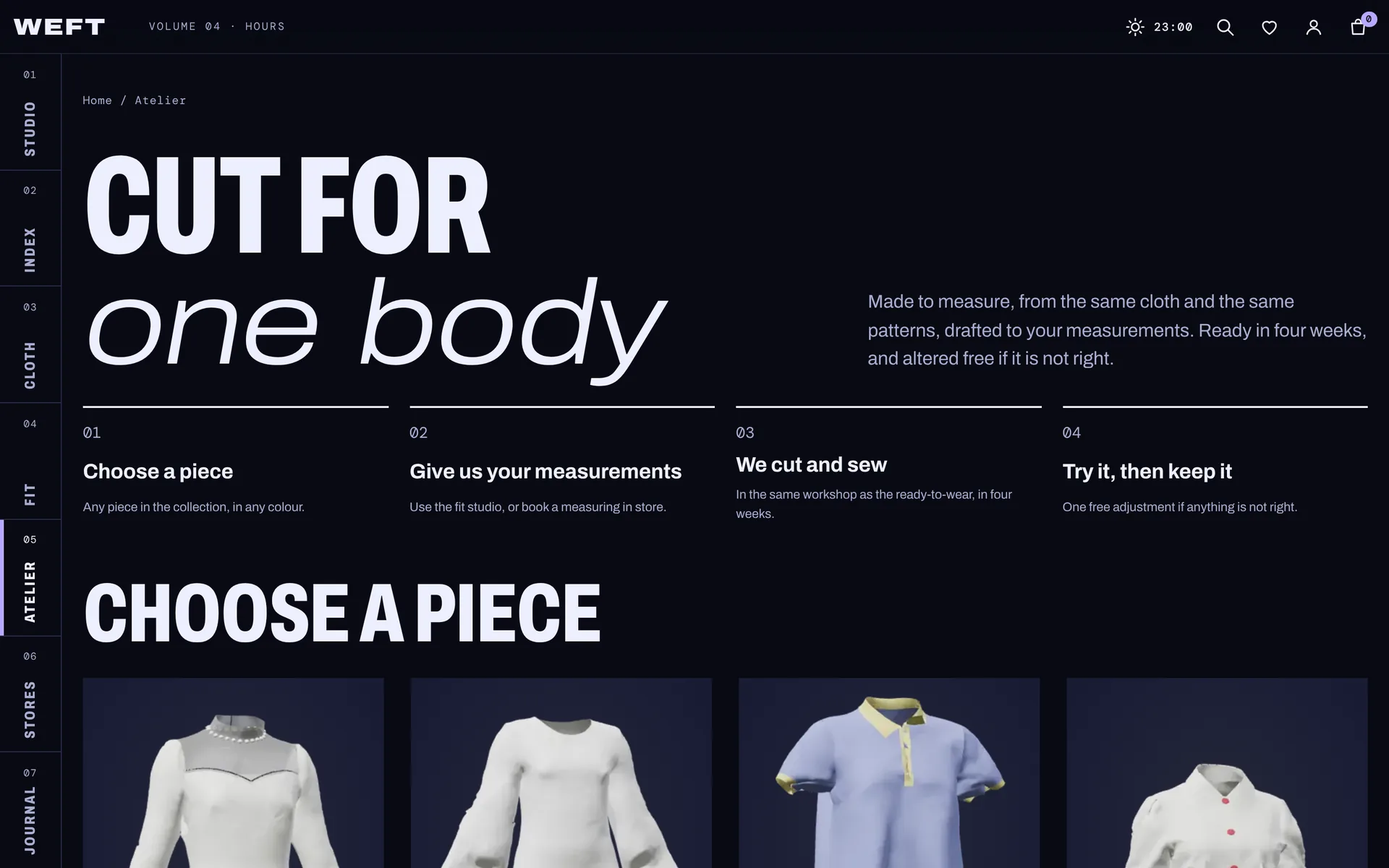
Any piece can also be cut to those numbers, so nothing is made that doesn’t fit, and little comes back.
0104
Height, bust, waist and hips rebuild the figure, and the garment is measured against it: a heat map shows where it sits close or loose, and the best size follows.

0204
Pieces go onto the figure one over another, the way they’d be worn, with the outfit’s total keeping up.

0304
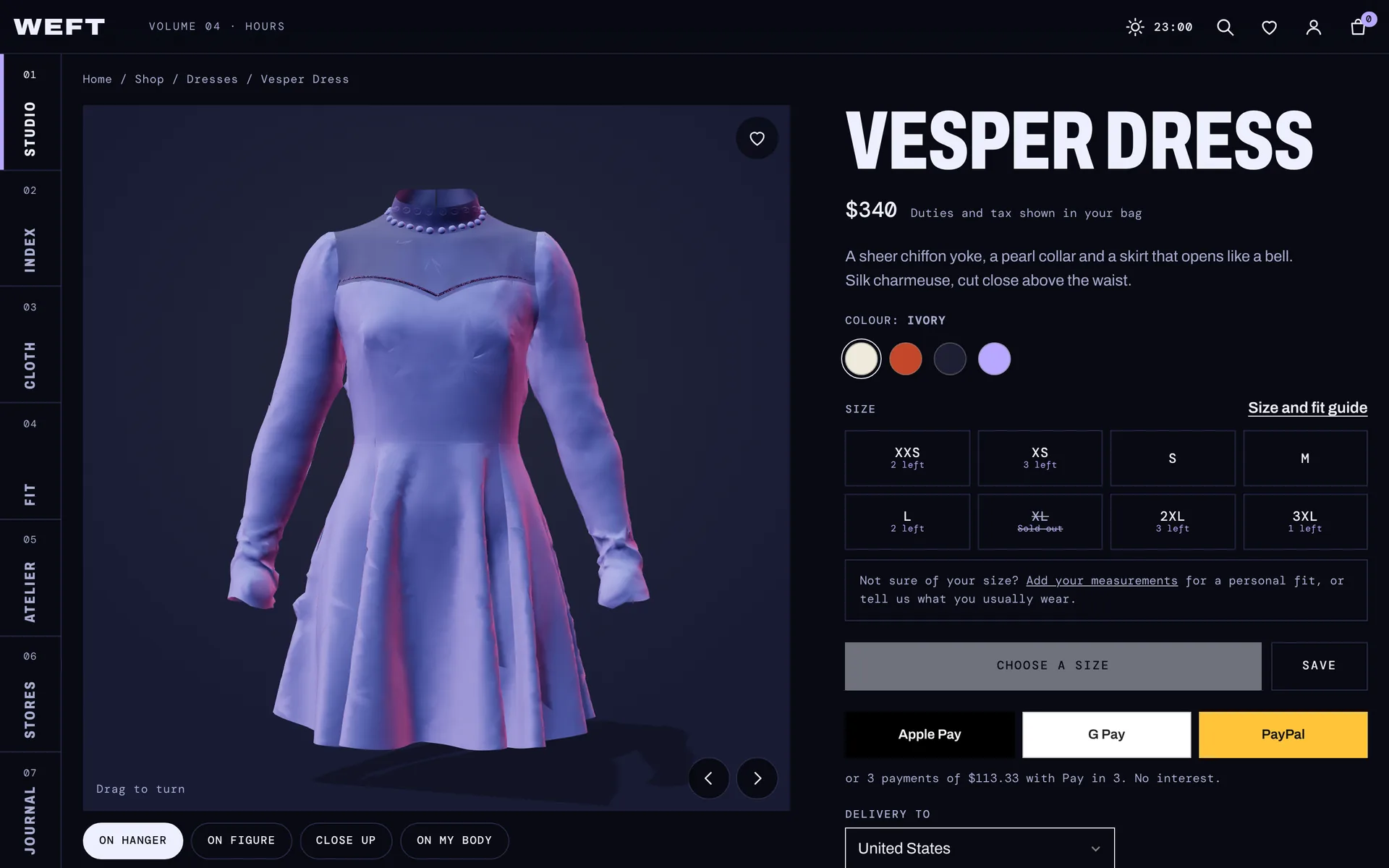
Each fabric is simulated with its own weight and drape, so silk satin can be pulled, dropped and blown about before it’s bought.

0404
Browsing is fitting: the figure beside the list wears whichever piece is being looked at.
Designed and directed by Amin Rajbanshi, built in conversation with AI.