
0104
Dishes in 3D, ingredients labelled
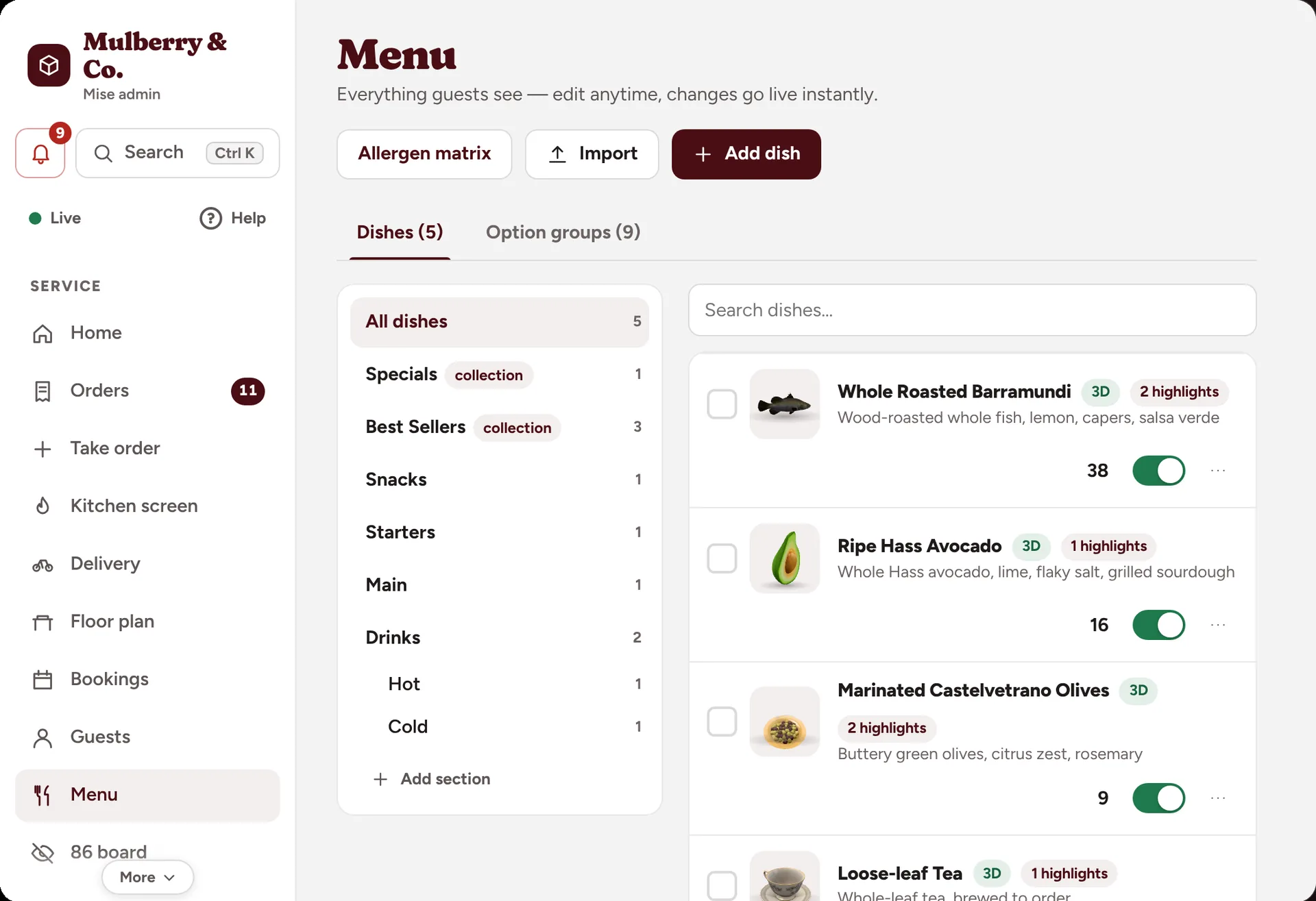
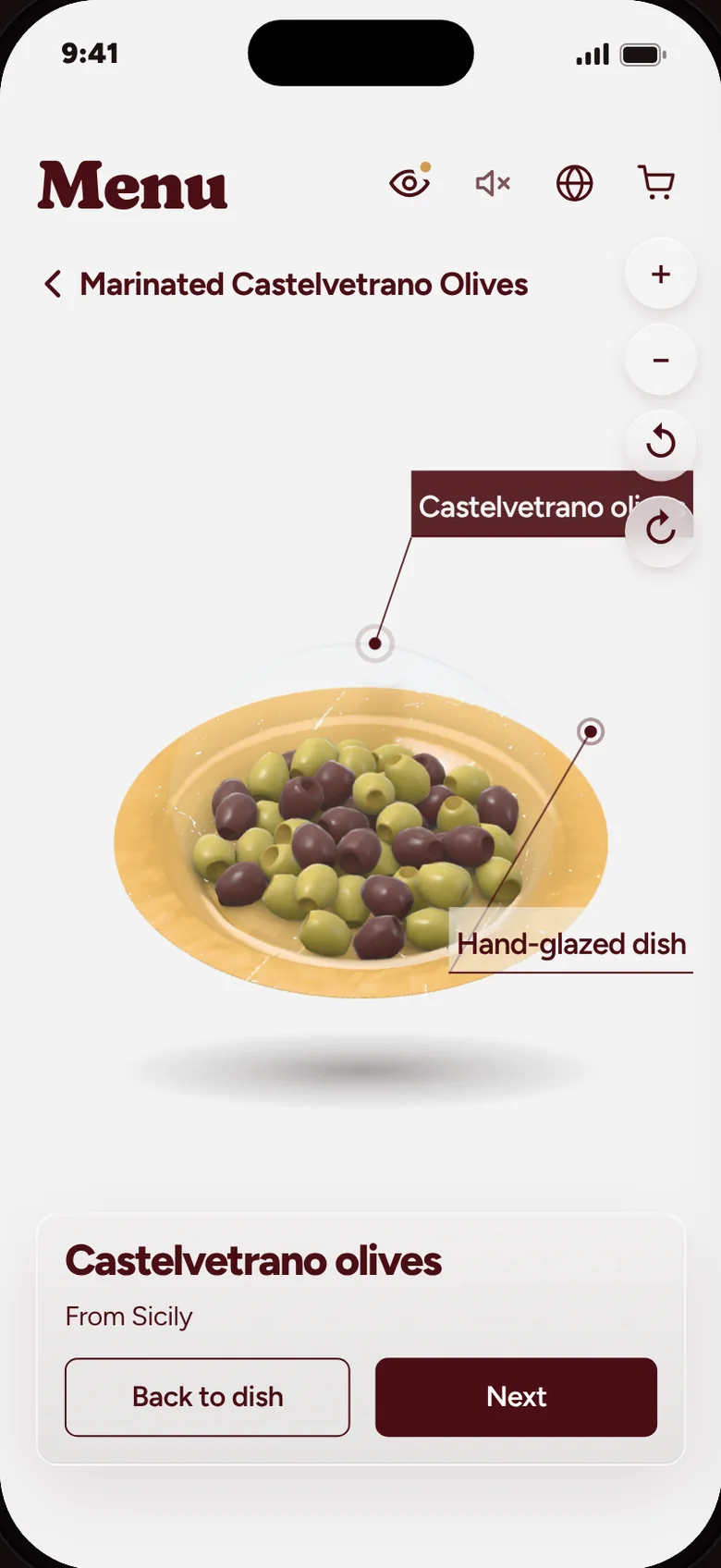
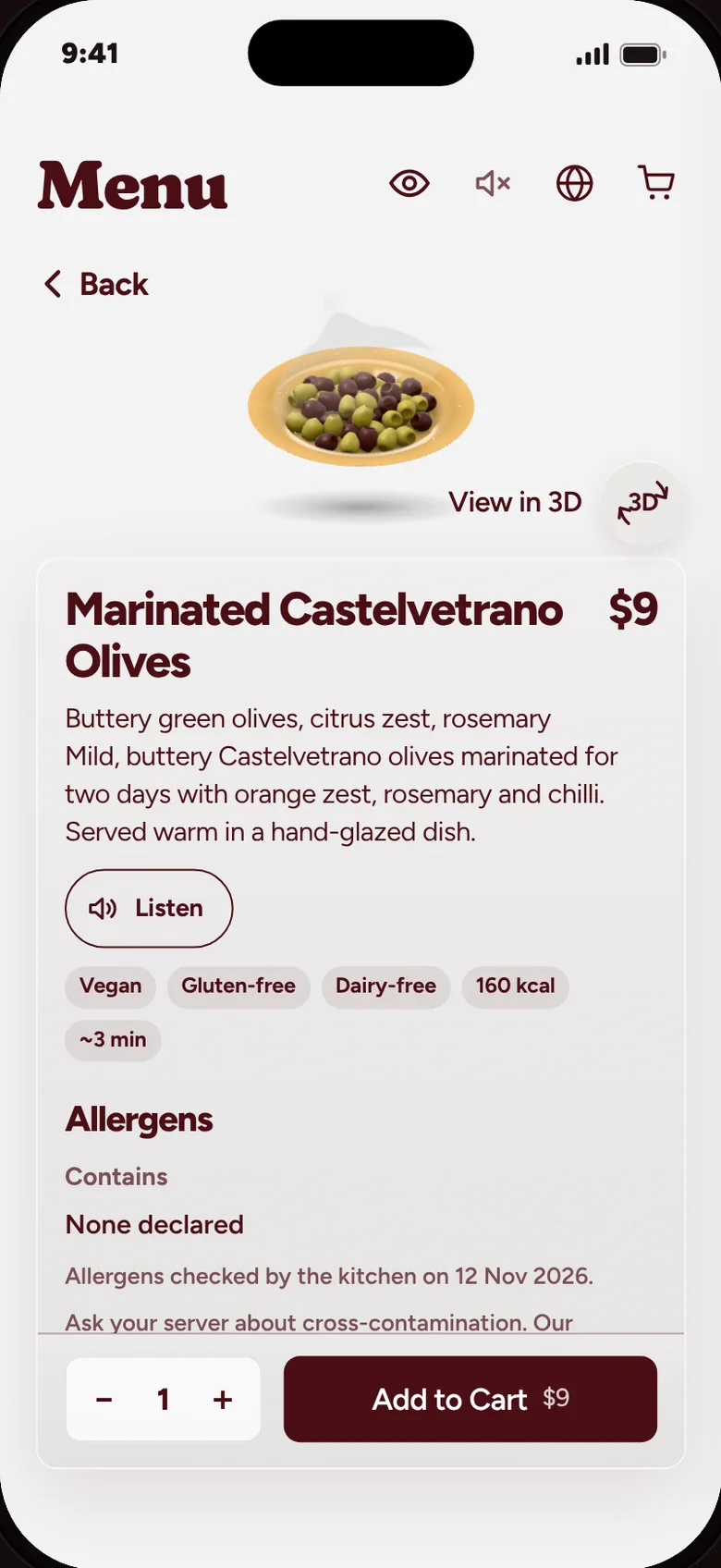
Each dish is a model the guest can turn and bring close, with its ingredients pinned to it rather than listed under it.
For the love of restaurants, mise en place.
A restaurant system with the menu at its centre. Every dish is a 3D model on the guest’s phone, and the order placed there runs the kitchen, the floor, the stock and the books. Shown as a live demo for a fictional restaurant, Mulberry & Co.
Visit mise.aminrajbanshi.com (opens in a new tab)
Mise is a product born out of our love for food and hospitality. It was a spontaneous idea amidst a casual conversation over a delicious dinner in the heart of Melbourne CBD.
3D technology has come a long way and is a recurring feature that many industries attempt to adopt and fail, yet no one seems to care about it enough to try again. Mise is where we bridge the gap. The gap between adoption of a high-quality 3D modelling technology and the daily running of a busy and bustling hospitality venue that has no time to stop and switch their operating model.
The smoothness of the transition from one technology to another, and the capability to run an entire business and all its moving parts under one roof i.e. one product – is Mise. Named after the famous French saying, “Mise en place”, it does exactly what it says.
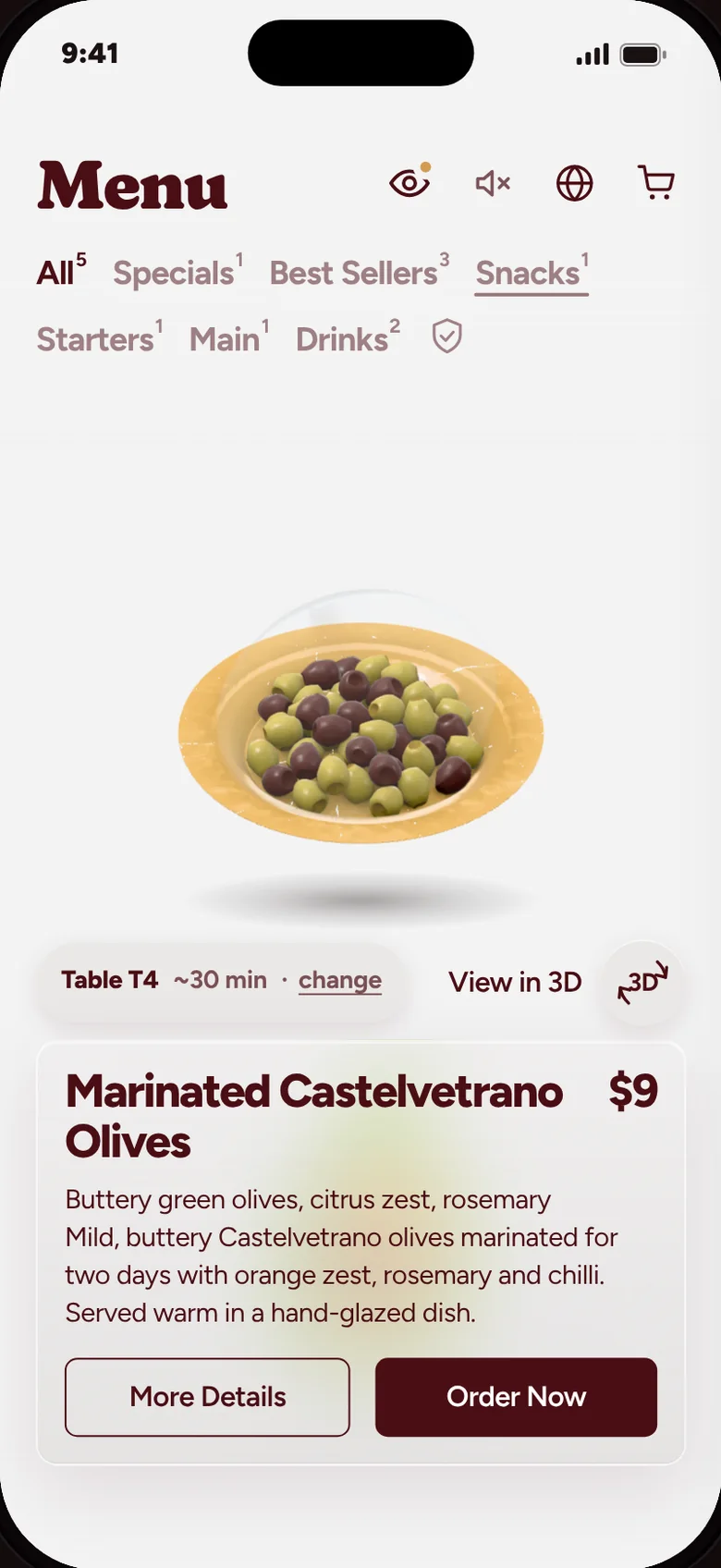
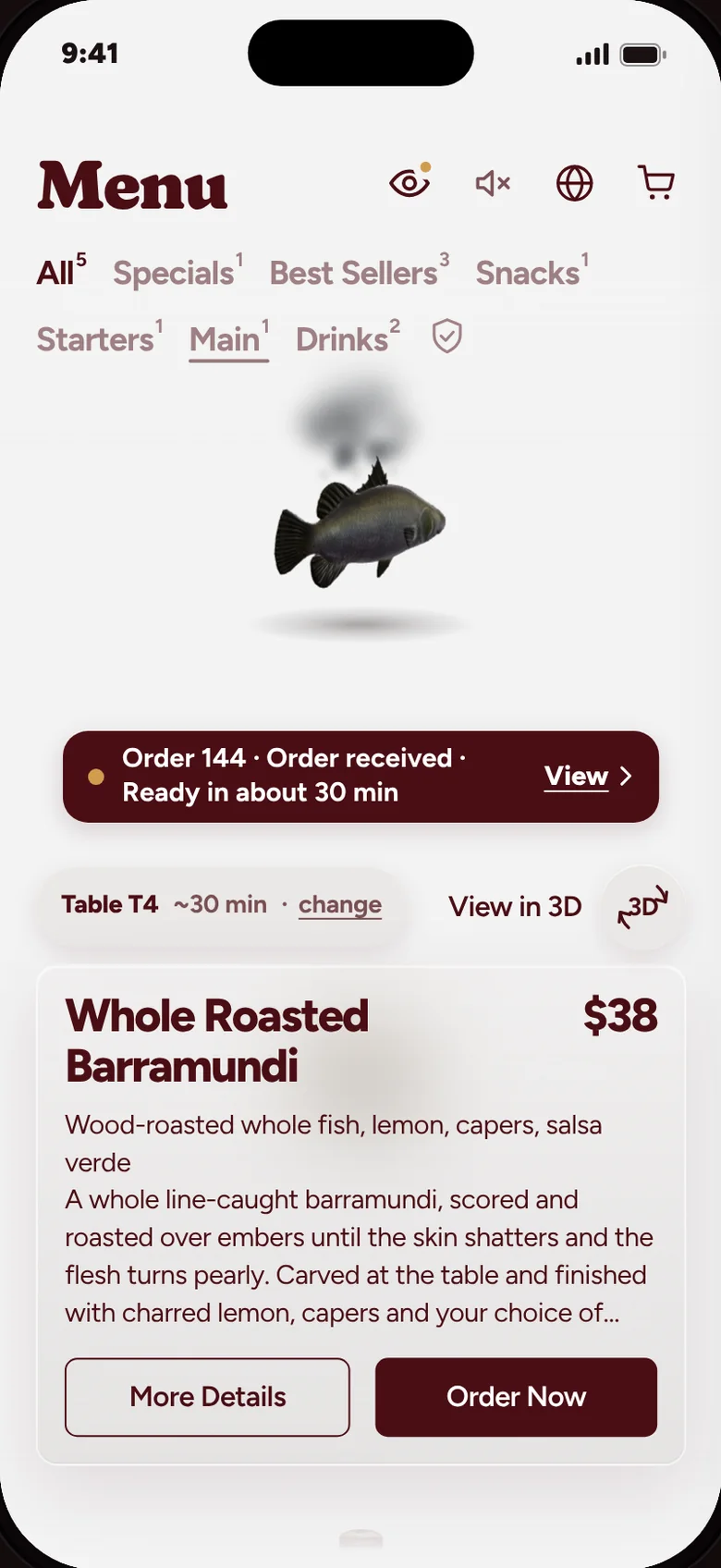
3D Models: The base of the idea is that dishes of the venue are presented as 3D models. Now, this gives us a plethora of other opportunities like adding auditory immersion experiences such as sounds of the dish being made, visual cues like smoke or steam appearing out of hot dishes stimulating the human brain, interactive labelling of 3D models with ingredients instead of listing them in long illegible sentences, and most obvious of all, being able to see the dish in front of you before even ordering it, albeit in a slightly lower resolution than the human eye, which I should point out, can still make your stomach rumble with desperation.
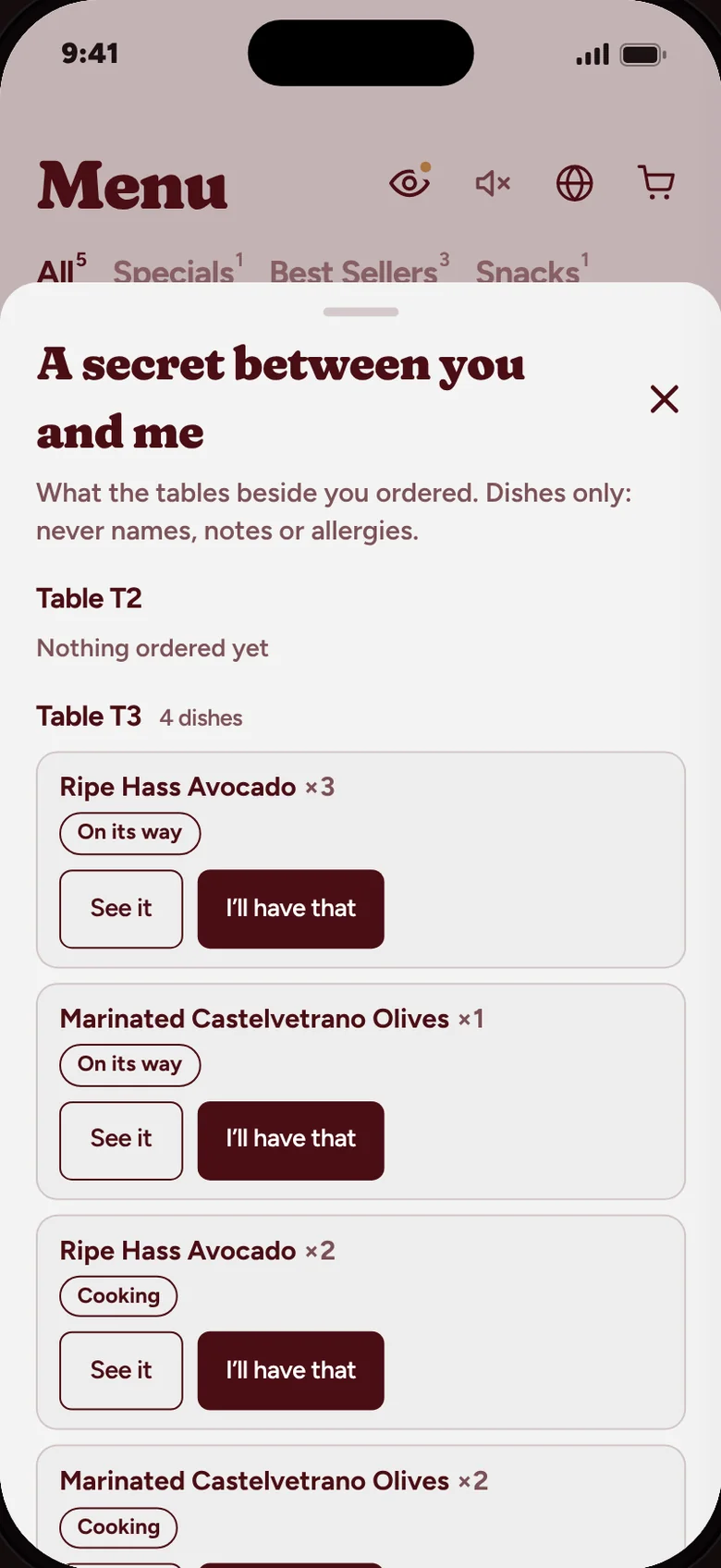
View your neighbouring tables’ orders: An all-in-one restaurant management system means that we have access to features that have never been tested before. And this one in particular is exciting. Have you ever walked into a restaurant, glanced at the table beside you, saw something absolutely delicious and wondered what it was, never actually being able to pinpoint it on the menu? Well, having control of the menu all the way to the kitchen and to the ordering system under one roof means that our product can show guests what the tables beside them have ordered. And of course we respect their privacy, so we never share the name of the guests or even their allergy options, we just share the particular dish on the menu. Sounds simple, right? But no other POS vendor can do this, because as mentioned, it needs the kitchen screen, the floor plan and the menu all together. It is the digital version of the fajita effect, where one plate passing by sells the next five.
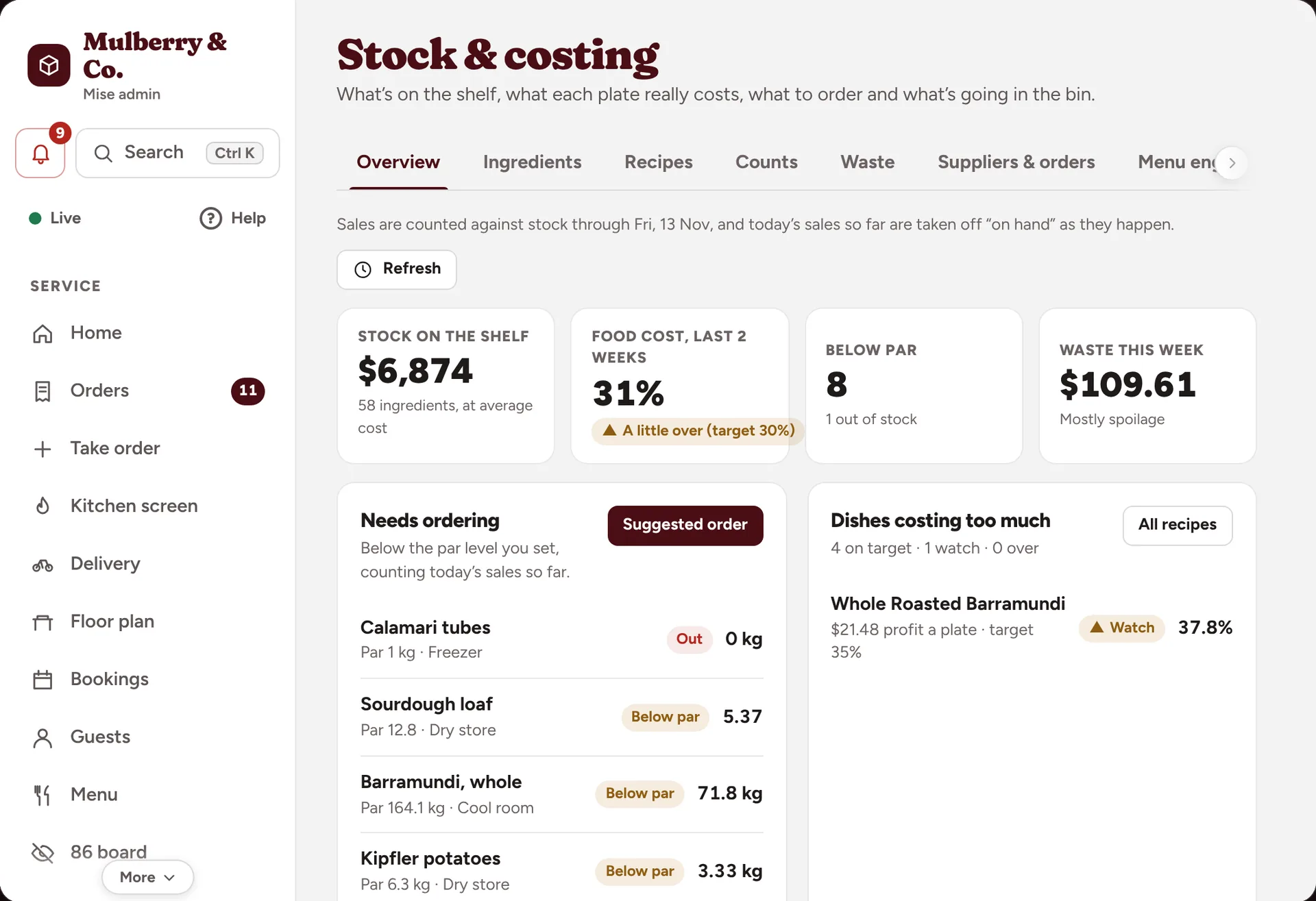
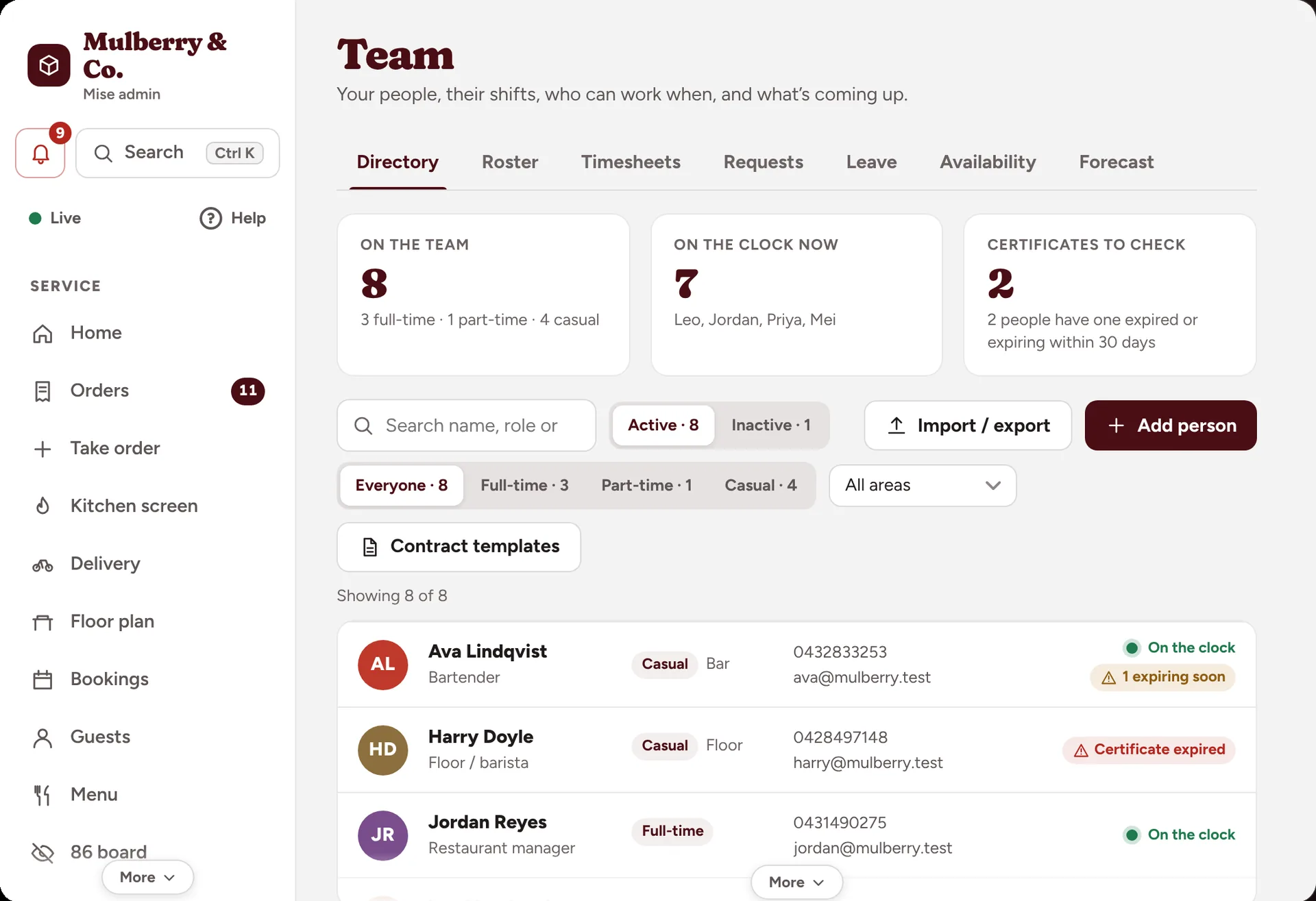
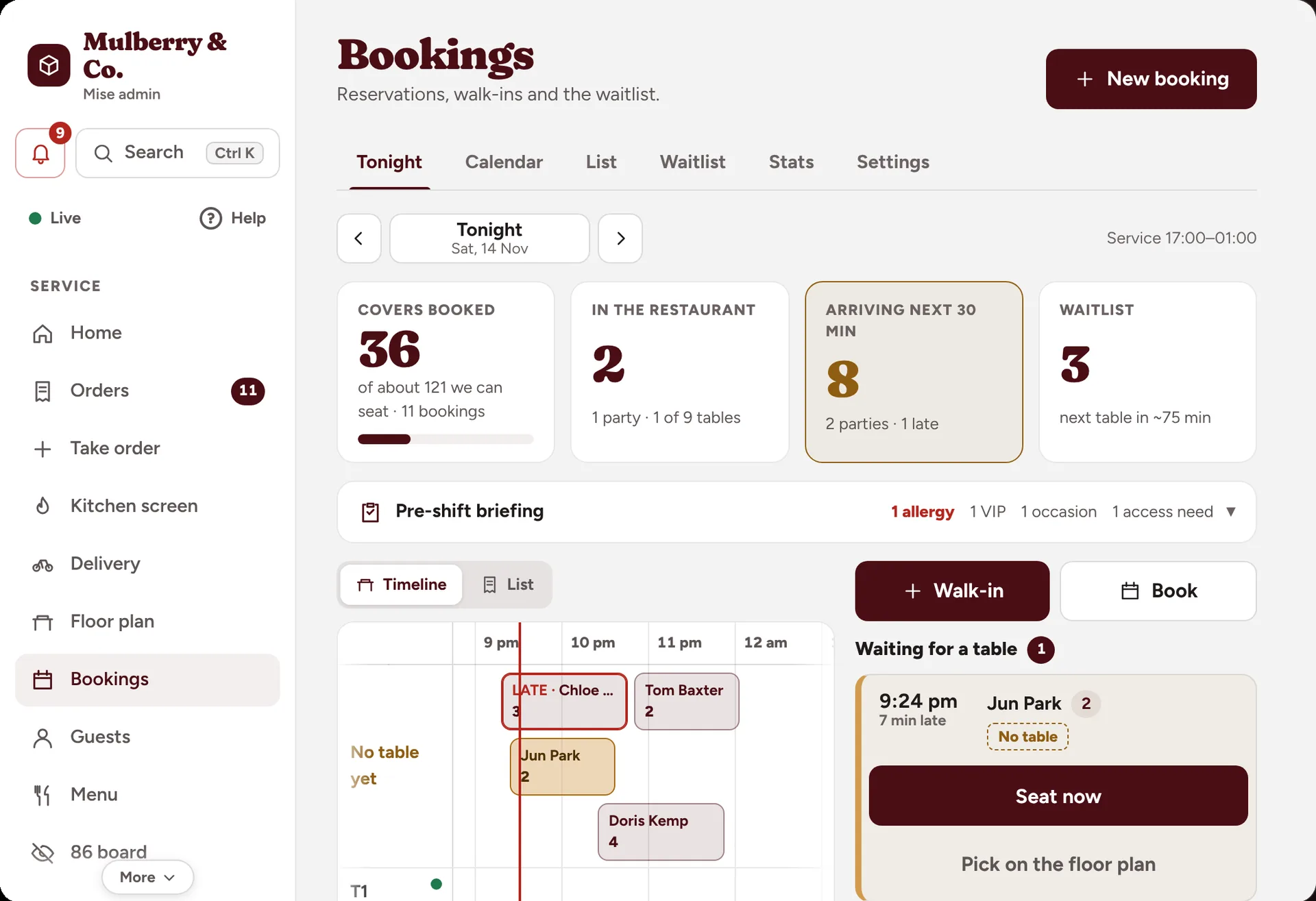
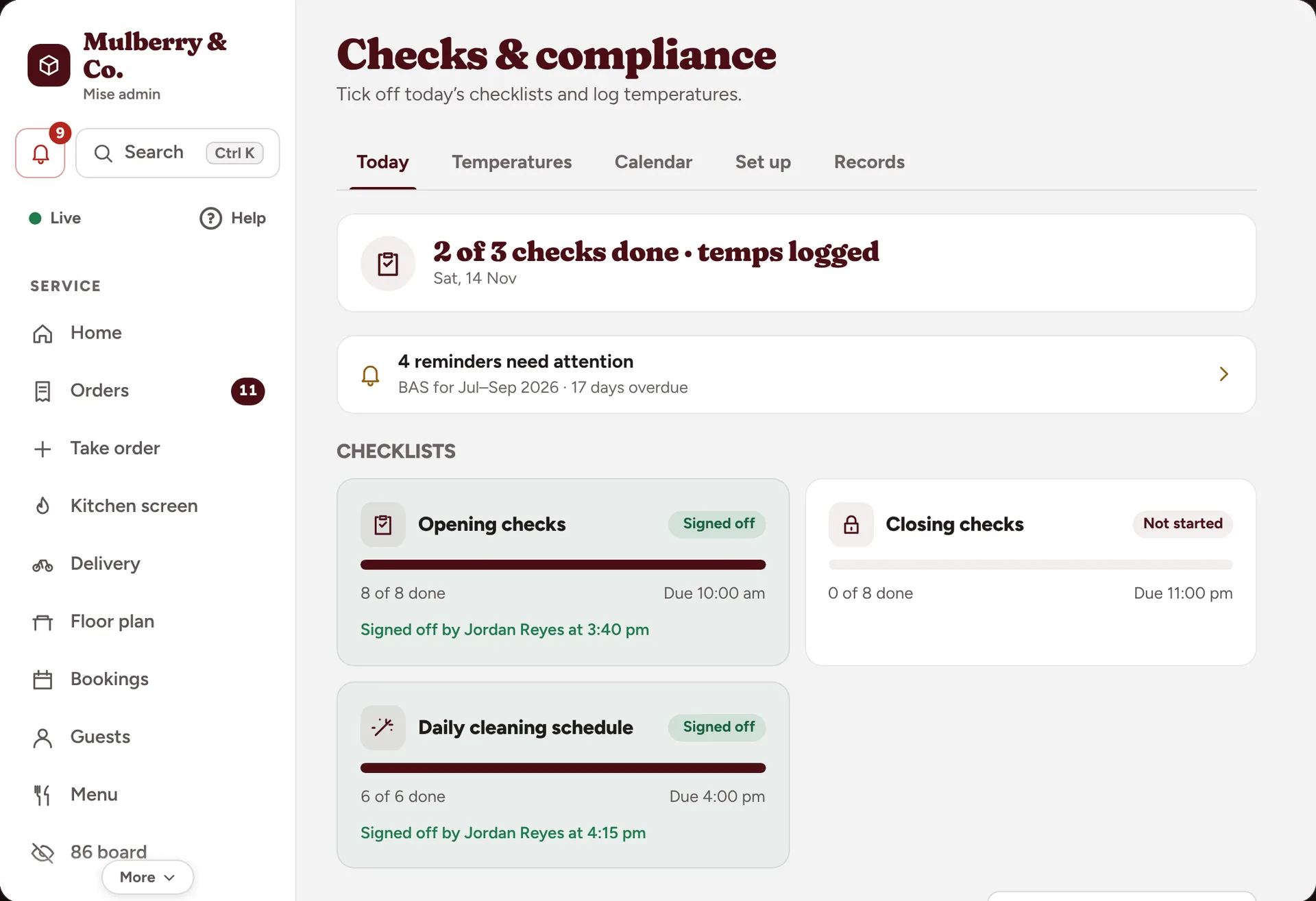
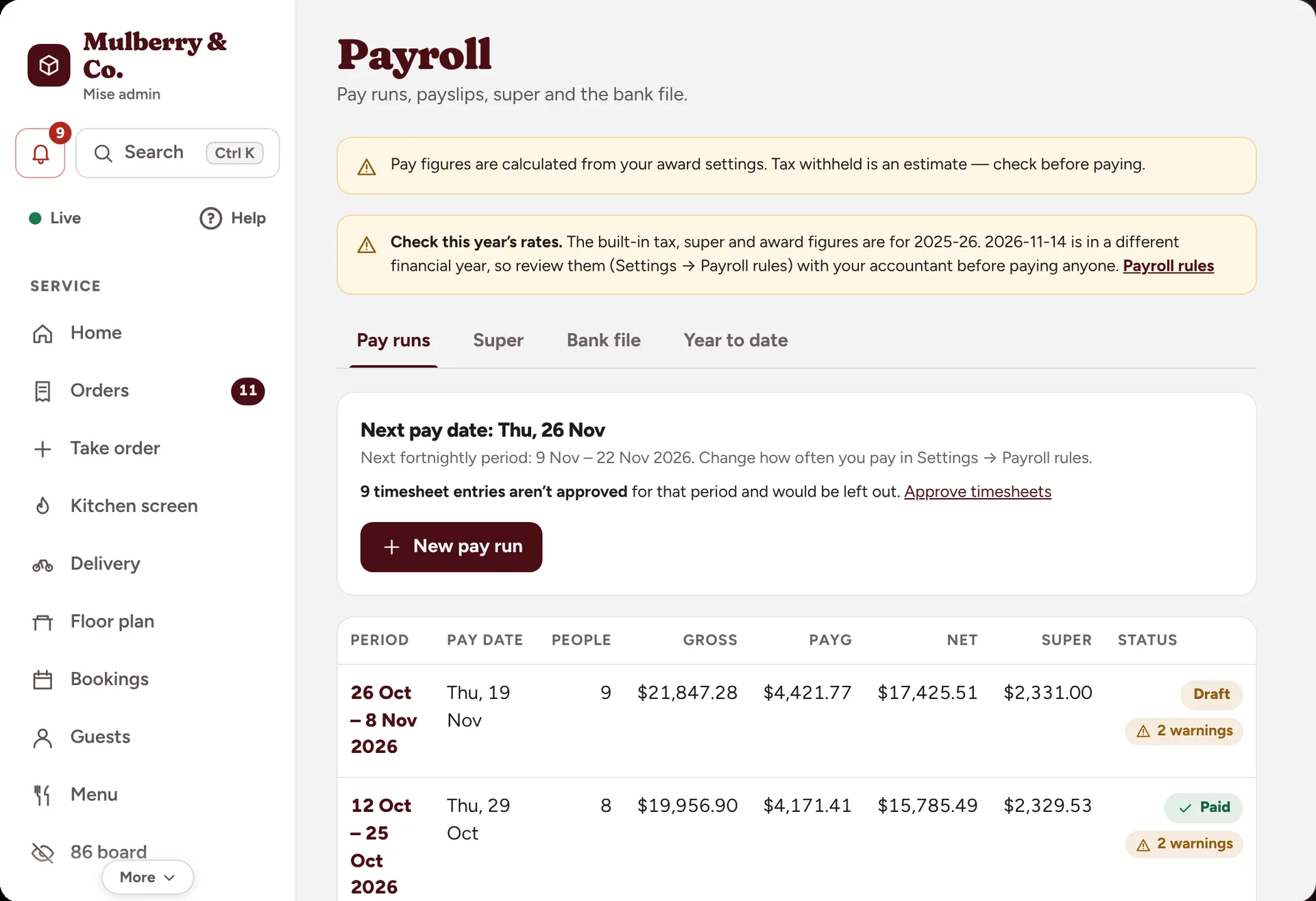
The obvious: We’ve been talking about an all-in-one system like it’s something very obvious and not worth talking about. However, we truly believe Mise takes it to a whole new level. Not only do we have the POS payment system and the kitchen display system, and the guest menu ordering system all in one product, we also have an employee/employer management system, from job contracts, to shift scheduling, to certificate verification. We also have restaurant floor plans, ingredients stock list, expiry dates and cleaning schedules. We have bookings, delivery, guest history and feedback management. We have business checks and compliance including reports for tax time, business activity statements and incident reports that abide by Australian business rules and regulations. We have PIN/fingerprint code access, money insights including all expenses and incomes, as well as a history on the number of orders and guests. If there ever was a system that hospitality venues could use and trust for their entire life, Mise would be the one.
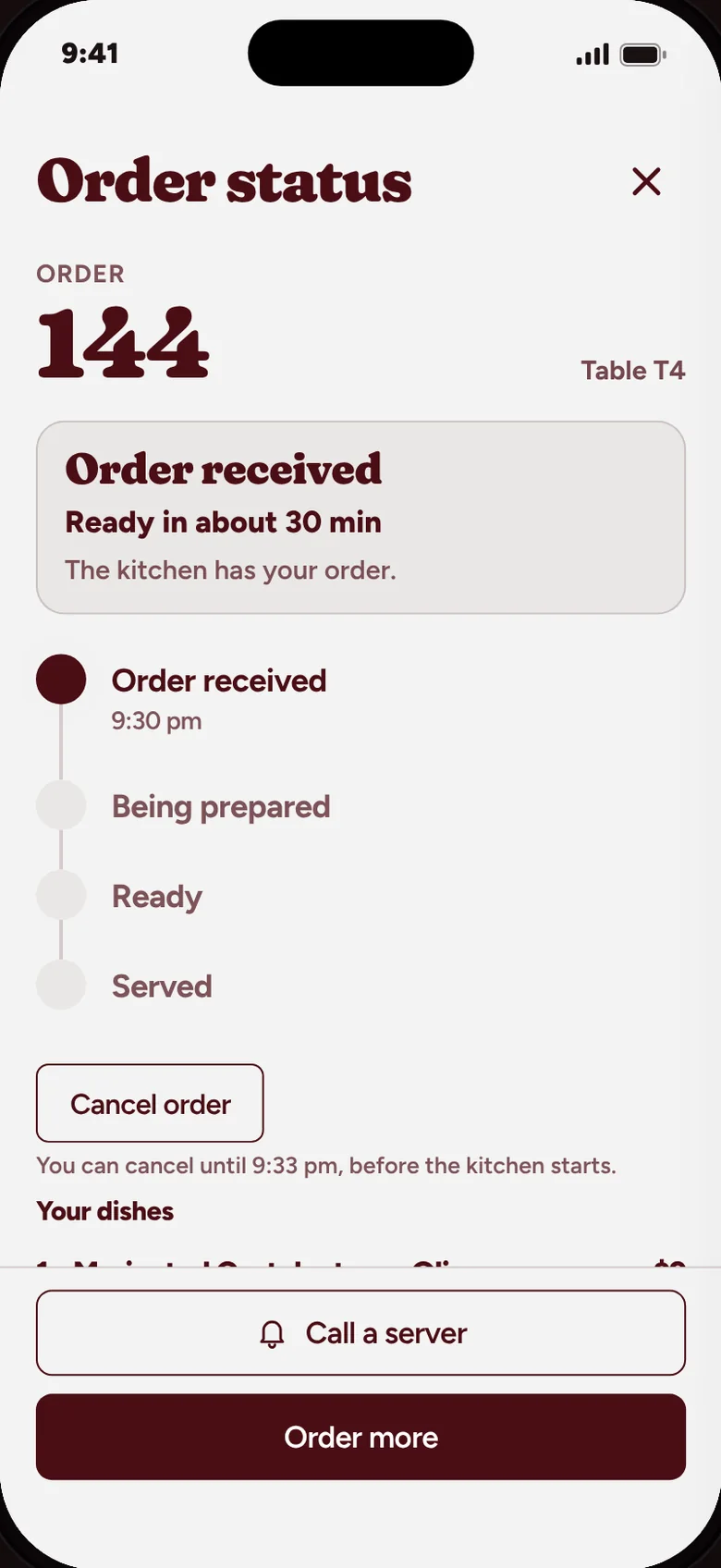
The guest’s phone is the menu, the waiter’s pad and the till. The order placed on it is the same record the kitchen screen, the floor plan, the stock and the takings all read from.
So the back office is never a day behind the dining room: it describes it as it is now.
0104
Each dish is a model the guest can turn and bring close, with its ingredients pinned to it rather than listed under it.

0204
An order placed at the table is a ticket on the kitchen screen the moment it’s sent. Nobody keys it in twice.

0304
Guests can see the dishes ordered at the tables around them, never names or notes. It’s only possible because the menu, the floor plan and the kitchen are one system.

0404
The kitchen screen, the floor plan and the takings sit in one product, a click apart, all reading the same orders.
Designed and directed by Amin Rajbanshi, built in conversation with AI.